
Visionnaire validated the existing code and structured the modular evolution to complete the development of a CRM
Client
Area
Summarized Problem
Summarized Solution
Results
The meticulous requirements work and technical definition led by Visionnaire provided
the necessary foundation for Britânia to move forward with the development of a system that had been on hold. Visionnaire
not only successfully managed the analysis phase, but also became a key pillar in the development process.
This is yet another case that proves Visionnaire is capable of supporting every stage
of a customer’s journey, from legacy system management to completing development.
In summary, Visionnaire delivered increased productivity to Britânia while also
reducing costs through a highly specialized software development team focused on delivery with agile and cloud-based processes,
in addition to using Scrum and weekly sprints.
Technologies
The chosen database was Microsoft SQL Server, with specific use cases involving NoSQL
databases.
Integration with TOTVS was required.
The system was hosted on Britânia’s own servers.

Detailed Problem
In mid-2020, Britânia was developing, with another vendor, a new CRM (Customer
Relationship Management), i.e., a solution to centralize and organize relationships with customers and potential customers,
since it consolidates information such as contact data, interaction history (emails, calls, WhatsApp, etc.), sales opportunities,
proposals, orders, support, and preferences.
However, development was interrupted. In this context, Britânia first needed
a consultancy to analyze the system developed up to that point in order to certify the possibility of continuing development.
The project took place during the 2020 pandemic; therefore, solutions needed to be
online. Not only that: Britânia was transitioning to agile practices, but with difficulties covering all its projects
simultaneously.
Visionnaire needed to understand the reference tool, elicit requirements, and propose
the best solution without “reinventing the wheel”, while still meeting specific rules.
Another point of attention was Britânia’s own development standards, and
it was imperative that development followed these standards in order to facilitate subsequent maintenance and the future transition
to in-house ownership.
To avoid issues previously experienced with another vendor, it was necessary to create
a robust and modular architecture to enable future evolution. Given that Britânia deals with many vendors, this part
was especially complex.
In the initial discussions between Visionnaire and Britânia, there was still
not a sufficiently detailed scope that would allow a 100% reliable estimate. Therefore, the client had two concerns: exceeding
allocated hours or “inflating” the estimate due to lack of clarity.
In short, the project was complex, involving many Britânia departments.
Detailed Solution
The assessment work consisted of a series of meetings between the teams from both
companies, demonstrations of the system in its current state, virtual and in-person meetings, visits to Britânia’s
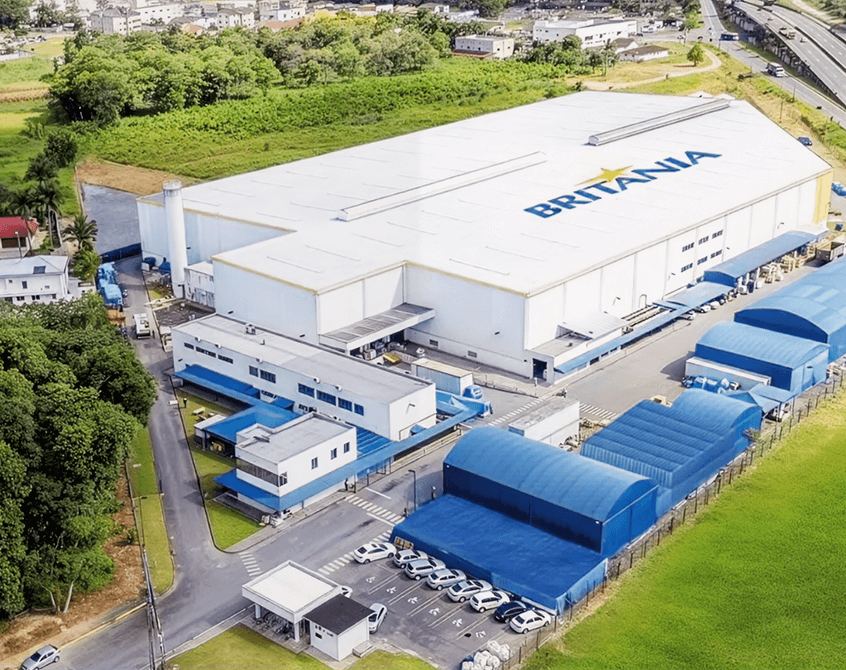
factories in Joinville, Santa Catarina, Brazil, and on-site presence to observe how the tools were being used at that time,
followed by presentations of the conclusions. In summary, it was found that it was possible to continue development of the
system based on the source code.
With the requirements phase completed successfully, the project moved on to the next phases, that is, prototyping and development, during which Visionnaire specialists supported Britânia’s internal team until the client took over the project.
Brochure
Presentation