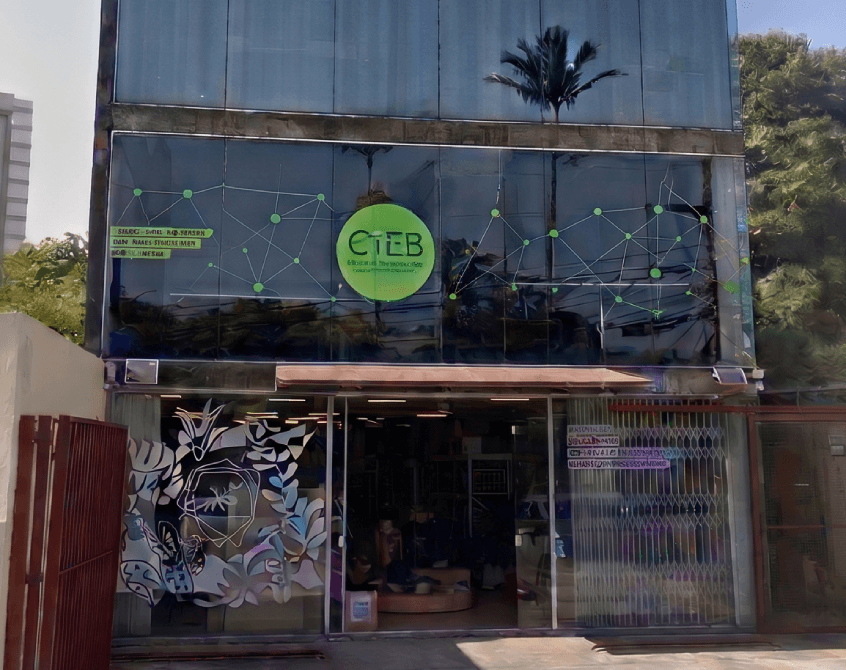
Visionnaire supported CIEB by providing IT professionals to modernize educational systems
Client
Area
Summarized Problem
Summarized Solution
Results
The collaboration expanded technical and development capacity by bringing qualified
IT professionals into CIEB’s team, reducing recruitment and retention challenges and enabling greater agility in meeting
software development and maintenance demands. It also enabled the modernization of system architecture by facilitating the
restructuring of Guia EduTec, gradually replacing legacy components and developing a more modern, robust architecture ready
for future evolution. This included migrating the back end from Ruby on Rails to Node.js and the database from MongoDB to
PostgreSQL.
Performance, scalability, and maintainability also improved through the reduction
of existing technical bottlenecks, easier bug fixes and implementation of new features, and preparation of the platforms to
support large numbers of users, given their use by schools and public education networks throughout Brazil.
Operating and infrastructure costs were optimized by pursuing a more efficient technology
structure, reducing excessive computing resource consumption and cloud hosting costs. At the same time, the outsourcing model
offered greater financial predictability by avoiding a permanent increase in payroll.
CIEB was able to adjust the number of professionals, their technical profiles, and
their time commitments according to project needs without conducting new internal recruitment processes for each requirement.
This provided greater flexibility in workforce management.
With the adoption of agile methodologies, incremental development, sprints, and continuous
integration and delivery (CI/CD) practices to accelerate feature development and enable progressive system improvements, increases
in productivity and delivery quality were observed.
Last but not least, the partnership supported the continuity and evolution of educational
platforms by keeping systems operational during modernization, preserving essential features, and enabling new resources to
support education administrators, schools, and teachers.
Technologies
For infrastructure, CIEB used Amazon Web Services (AWS) to host its systems, with Docker and Kubernetes to manage environments and services. Development also relied on tools such as Bitbucket for source code version control and management, and Jira for organizing and tracking activities. These technologies supported platform modernization and the integration of the professional assigned by Visionnaire into CIEB’s technology team, contributing to a more organized and efficient development process.

Detailed Problem
CIEB approached Visionnaire because it was struggling to recruit and retain IT professionals
while also needing to modernize its systems and ensure the continuity of its educational platforms. The institution had a
small technology team and struggled to keep up with system development and maintenance demands. As a nonprofit organization
funded by supporting institutions and operating under an annually planned budget, it needed to balance operating costs. Directly
hiring developers under Brazil’s CLT employment regime was expensive, while internal recruitment processes were time-consuming
and did not always attract or retain qualified professionals.
In addition, the organization faced technical challenges involving its main system,
Guia EduTec, originally developed in Ruby on Rails with a MongoDB database and a React interface. The platform had grown significantly
since its creation, becoming complex, difficult to maintain, and costly in infrastructure terms. CIEB needed to restructure
the solution by migrating the back-end to Node.js and the database to PostgreSQL to improve its architecture, scalability,
performance, and maintainability.
Against this backdrop, the institution sought Visionnaire to outsource the provision
of specialized software development professionals, initially focusing on a back-end developer who could join its team and
take part in modernizing Guia EduTec. The outsourcing model would make it possible to add technical expertise without permanently
increasing headcount, providing greater flexibility to adjust staffing and contracted hours as project needs evolved.
In short, the central problem was a combination of limited staffing, recruitment difficulties,
budget constraints, and a need for technological modernization. CIEB needed a partner that could provide technical capacity,
operational flexibility, and cost predictability to maintain and evolve its digital solutions for Brazilian public education.
Detailed Solution
The solution initially involved assigning a full-time
mid-level Systems Analyst/Developer to work on CIEB’s technology projects, especially the restructuring and evolution
of its digital platforms. Visionnaire provided the professional and their software development expertise, working in close
collaboration with the institution’s team. The model also included a Project Manager from Visionnaire, utilizing cloud-based
management methodologies and tools (Atlassian tools, such as Bitbucket, Confluence, Jira, and Trello). This allowed for the
adjustment or expansion of the team as new demands arose, incorporating professionals with various areas of expertise and
levels of experience.
To carry out the work, Visionnaire used agile
methodologies, particularly Scrum, with iterative and incremental development, activities organized into sprints, and continuous
integration and delivery (CI/CD) practices. This approach sought to ensure frequent deliveries, adaptability to changes, and
progressive system evolution, recognizing that modernizing CIEB’s platforms could be a long-term project.
In summary, Visionnaire’s solution gave
CIEB flexible access to qualified professionals, combining the expertise of a software development company with modern development
practices. This enabled the institution to address hiring challenges, strengthen its development capacity, and advance the
maintenance and modernization of its systems while maintaining greater investment predictability and flexibility in team composition.
Brochure
Presentation