

Artificial Intelligence is changing attacks, defenses, and security decisions. Is your company ready?
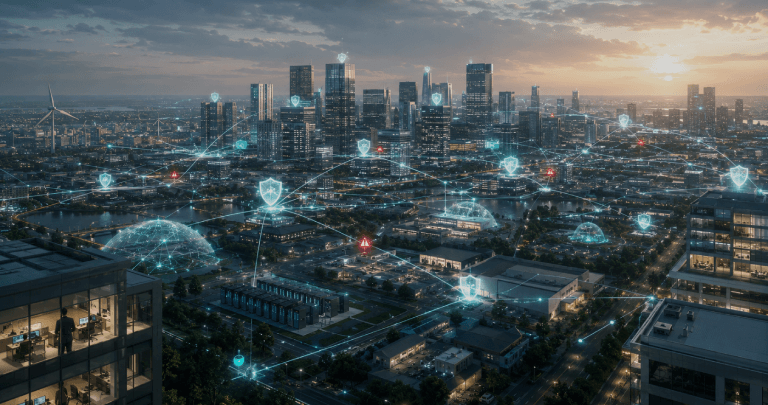
Digital security has entered a new phase. For years,
information security was treated as a race between those who attacked and those who defended. On one side, criminals exploited
flaws, leaks, exposed credentials, and system breaches. On the other, teams tried to monitor alerts, fix vulnerabilities,
strengthen policies, and respond to incidents before the damage could spread.
Now, that logic is changing. Artificial Intelligence
is no longer just a support tool and has started acting as a capacity accelerator. It helps find vulnerabilities, analyze
large volumes of data, prioritize risks, investigate suspicious behavior, and automate responses. At the same time, it can
also be used by attackers to create more convincing scams, speed up scans, generate malicious code, and exploit flaws more
quickly.
The result is simple and urgent: security in the
Age of AI will not be just an evolution of traditional security. It will be a fundamental change in the way companies protect
their systems, data, applications, and operations.
AI increases
the scale of risks, but also of defense
The advance of AI models applied to cybersecurity
is already visible. OpenAI, for example, introduced the Trusted Access for Cyber
program, an initiative designed to broaden responsible access to advanced AI capabilities for verified defenders, with safeguards
against misuse. Later, the company announced the expansion of the program to thousands of individual defenders and hundreds
of teams responsible for protecting critical software.
This movement shows an important trend: the most
advanced AI capabilities in security should not remain restricted to laboratories or large global companies. They are likely
to increasingly reach the teams on the front lines of defense, from SOC (Security Operations Center) teams to professionals
responsible for applications, infrastructure, cloud, DevOps, and governance.
Tools and models such as Mythos, along with specialized
frameworks for AI cybersecurity, indicate that the market is quickly moving toward a new category of solutions. Some focus
on identifying vulnerabilities, while others support security testing, code analysis, investigation automation, incident response,
and offensive or defensive simulations. The central point is not to choose a specific name, but to understand the movement:
AI is becoming part of the security infrastructure.
The problem
is not just the attack; it is the speed
In security, time has always been a critical factor.
The faster a flaw is discovered, exploited, or fixed, the greater the difference between containment and crisis. With AI,
that difference tends to become even more dramatic.
An AI agent can analyze logs, correlate events,
review code, consult knowledge bases, suggest fixes, and support decisions at a speed that would be impossible for a human
team alone. The same reasoning applies to the offensive side: attacks may become more automated, more personalized, and harder
to detect with traditional methods.
That is why companies cannot treat AI merely as
a productivity resource. When poorly governed, it also creates new surfaces of risk. AI-generated code may contain vulnerabilities.
Employees may enter sensitive data into unauthorized tools. Models may be manipulated by malicious prompts. Autonomous agents
may execute actions without proper validation. So-called shadow AI, meaning the uncontrolled use of AI tools within the organization,
is likely to become one of the major pain points in corporate security.
From antivirus
to intelligent agent
Corporate security has gone through several phases.
First, protecting machines; then, protecting networks; next, protecting applications, identities, cloud, APIs, data, and software
supply chains; now, the next step is to protect increasingly dynamic, automated environments mediated by intelligent agents.
In this scenario, defense can no longer depend only
on isolated tools and must require more integrated architectures. A modern security environment needs to combine monitoring,
automation, behavior analysis, code validation, vulnerability management, access control, data protection, and rapid incident
response. AI can enhance all of this, but only when it is embedded in trustworthy processes.
It is not enough to place an advanced model to “watch”
the environment. It is necessary to define what it can access, which actions it can suggest, which actions it can execute,
when it requires human approval, how its decisions will be recorded, and how risks will be audited. In other words, security
with AI requires both technology and governance.
The new
frontier of cybersecurity
The debate around models such as Mythos shows how
AI applied to security has already entered a strategic zone. Independent analyses and recent discussions indicate that advanced
models can support vulnerability discovery, but they also raise concerns about access, control, and the safe use of these
capabilities. The debate around defensive security with AI reinforces that the central question is not whether one specific
tool will dominate, but whether organizations will be prepared for a scenario of increasingly automated attacks and defenses.
Models such as DeepSeek point to another important
issue: general-purpose AI can also directly affect software security. CrowdStrike research identified risks related to the
generation of vulnerable code by AI models under certain conditions, showing that the use of AI in development must be accompanied
by review, testing, policies, and proper validation.
This means the risk is not only in hackers using
AI. The risk is also in companies adopting AI without technical maturity, without security criteria, and without integration
with good engineering practices. AI can accelerate software delivery, but it can also accelerate the creation of vulnerabilities
if there is no control.
Security
in the Age of AI starts with development
For companies that create, maintain, or modernize
systems, the security discussion cannot be left only to the end of the project. It needs to start in the conception of the
solution, pass through architecture, continue through development, reach testing, and remain present during support and maintenance.
In practice, this means applying security from the beginning, with code review, dependency analysis, API protection, credential
management, automated testing, continuous monitoring, and clear policies for the use of AI in the development cycle. In a
Software and AI Factory, this vision becomes even more relevant because AI can participate in different stages of system construction,
from code generation to documentation, from test automation to incident analysis.
The great opportunity is to turn AI into an ally
of security, not a new source of invisible risk. To do this, companies must combine technical capability, software experience,
business vision, and governance.
The future
belongs to companies that know how to combine AI and trust
Security in the Age of AI will not be won only by
those with the most tools. It will be won by those capable of creating trustworthy, resilient environments prepared for rapid
change. This involves technology, people, processes, and a clear view of risk.
Companies that continue to treat security as an
isolated stage tend to become vulnerable. Those that incorporate security into development, infrastructure, data management,
and the use of AI will be better prepared to operate in a market where attacks will be faster, systems will be more complex,
and decisions will need to be made with far less room for error.
With 30 years of experience in technology, Visionnaire
understands that security, software, and AI can no longer move separately. The future of digital protection depends on well-architected
solutions, responsible development, intelligent automation, and a mature approach to turning innovation into competitive advantage
without giving up trust.
If your company is evaluating how to use AI more
securely, modernize systems, reduce risks, or prepare its operation for this new reality, Visionnaire can help turn this challenge
into strategy. Click here to contact us
and learn more.


